
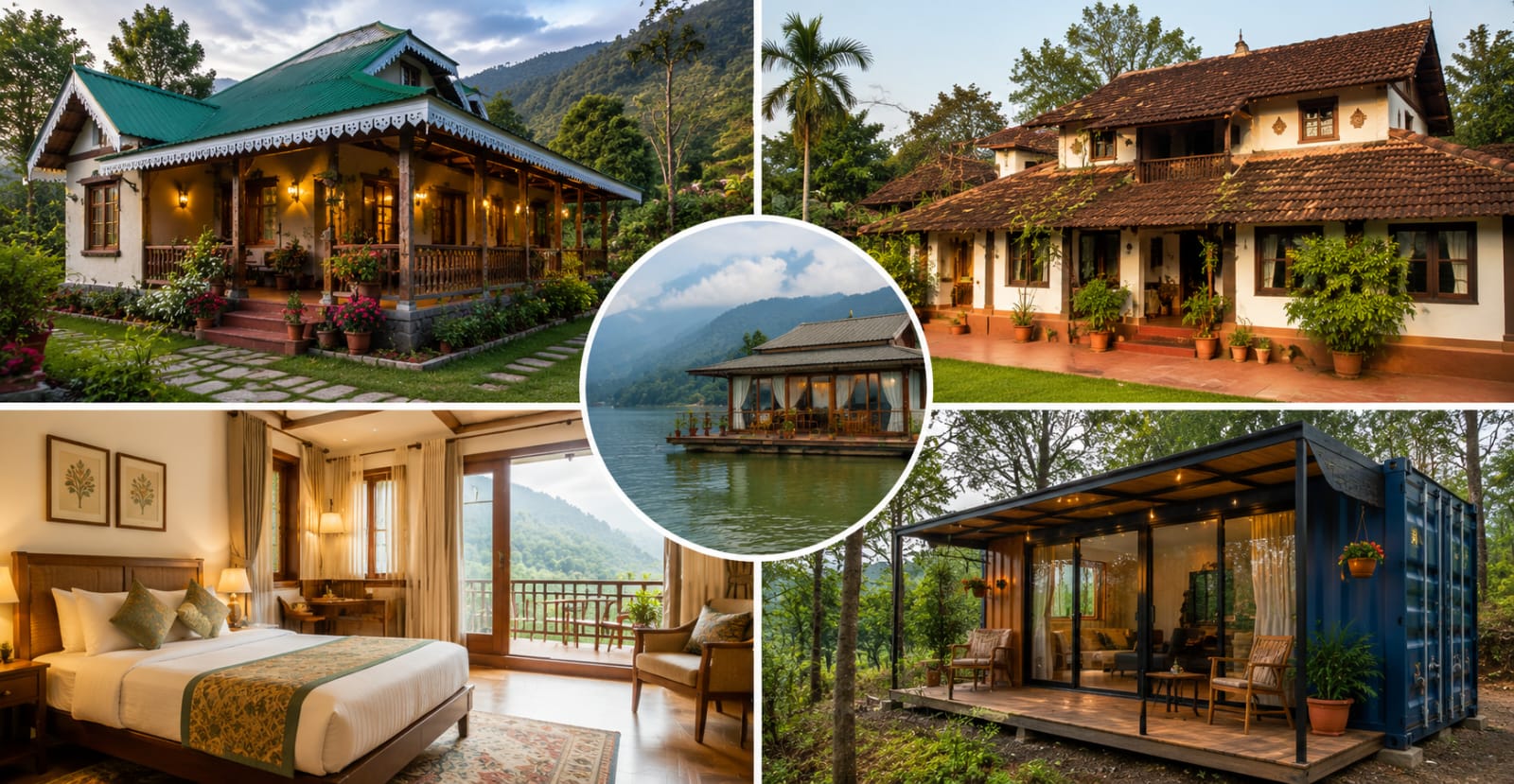
You might think a homestay simply means staying in someone’s home. That is partly true, but there is much more variety than that.
Homestays can be of many different types, ranging from a room in a family home to a cottage or an old-style building up to a large farm. While some hosts choose to cook for their guests, others give them full freedom of movement, which makes homestays particularly appealing.
So, if you are looking at homestays for the first time, it helps to know what you are actually choosing.
1. Family Homestays
This is probably what most people picture when they hear the word homestay.
You stay in a home where the host or their family may also live. You might have breakfast together, ask the host where to eat nearby or get directions to a place that does not appear on every tourist map.
The experience is usually more personal than a standard hotel stay. Of course, how much interaction you have depends on the host.
2. Private Room Homestays
At this place you can have a private room although certain parts of the property may be shared. For instance, you could have your own bedroom but share the living room or kitchen with other guests or the host.
In some properties there is also a private bathroom but not in others.
So make sure to read the description of the place because it is important to know what's private and what's not.
3. Entire-Property Homestays
Going on a trip with family or friends? An option of renting an entire property may be a better choice than reserving several rooms at hotels.
You may enjoy the use of a lounge, bedrooms, kitchen, or garden with your group staying in the property.
Before your booking, you have to check the guest limit and house rules provided by the owners. Some venues restrict parties, visitors, and cooking.
4. Heritage Homestays
For many homes, their history can be traced back years, sometimes even centuries.
Heritage homestays can also be old buildings that have been rebuilt or renovated though maintaining their authenticity through keeping the local architecture, traditional furniture, patios, and such.
The accommodation may not be like in a 21st-century hotel but that is the beauty of it.
5. Farm Homestays
A farm stay is for travellers who want a break from traffic, screens and crowded tourist areas.
These properties can be located around farms, orchards, plantations or villages. Depending on the host, you may get home-cooked food or see some of the work that happens around the property.
If you are travelling with children, this can also be a fun way to introduce them to a side of life they do not usually see.
6. Mountain and Nature Homestays
For some trips, the surroundings are the reason you are going in the first place.
Mountain and nature homestays are often found near hills, forests, rivers or hiking areas. The property itself may be simple, but a balcony with a valley view can easily become your favourite part of the stay.
There is one thing to check carefully: accessibility. A remote property may look perfect online but could require a long drive or a walk from the main road.
7. Cultural Homestays
Some travellers want more than sightseeing. They want to understand the place they have travelled to.
Cultural homestays can offer that opportunity through local food, traditions, crafts or conversations with the people who live there. What you actually experience will depend on the host, so check the listing rather than assuming an activity is included.
Which Type of Homestay Is Right for You?
Think about what you want from the trip.
Do you want to interact with locals? Consider family or cultural homestays. Are you looking for more independence? Then perhaps a private room or the entire property will suit your needs perfectly. Trying to escape from it all for a few days? Consider a farm homestay or disable internet at the place you are going to.
Then look at the practical details: location, reviews, amenities, privacy, house rules and total cost.
GharOnGo can make this search easier by bringing different homestays together in one place. You can explore property details and connect with hosts to ask questions before deciding.
This stage is important as one needs to keep in mind that photos tell only part of the story. A couple of minutes spent in a conversation with the host will inform you whether the accommodation is right for you or not.
Find the Homestay That Feels Right
There is no single type of homestay that works for everyone.
Sometimes you want a host who tells you where the locals eat. Sometimes you want a quiet room and your own space. And sometimes, all you want is a little house in the hills where you can sit with a cup of tea and do absolutely nothing.