
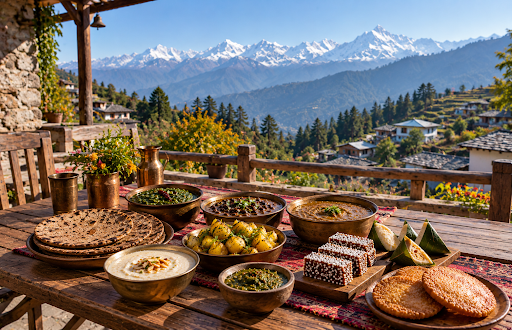
1. Kafuli: The Green Goodness of Garhwal
Kafuli is a traditional Garhwali dish prepared primarily with leafy greens such as spinach and fenugreek. Cooked with garlic, spices and sometimes a rice-based thickener, it has a rich consistency and an earthy flavour. It is usually served with rice or mandua roti.
What makes kafuli special is its connection to everyday mountain cooking, where seasonal vegetables are transformed into nourishing meals using simple ingredients. Spinach and fenugreek provide fibre, vitamins and minerals, making kafuli a wholesome addition to a traditional meal.
2. Bhatt Ki Churkani: Kumaon’s Black Soybean Curry
Bhatt ki churkani is one of Kumaon’s best-known traditional dishes. It is made using bhatt, a local variety of black soybean, cooked with spices to create a thick, flavourful curry.
The dish reflects the importance of pulses in Kumaoni households, where locally available ingredients have long been used to prepare filling meals. Black soybeans are a good source of plant-based protein, fibre and minerals. Bhatt ki churkani is commonly enjoyed with steamed rice or millet flatbread.
3. Chainsoo: A Hearty Garhwali Classic
Chainsoo is a distinctive Garhwali lentil preparation made with roasted black gram, usually urad dal. Roasting the lentils before cooking gives the dish its characteristic smoky, nutty aroma.
Popular for its rich flavour and satisfying texture, chainsoo is particularly appealing during colder months. Its preparation showcases how traditional cooks create depth of flavour without relying on elaborate ingredients. Black gram also supplies plant-based protein and fibre, making chainsoo a filling meal when served with rice or roti.
4. Aloo Ke Gutke: A Simple Dish Full of Flavour
Aloo ke gutke is a popular Kumaoni potato preparation that proves simple food can be incredibly delicious. Boiled potatoes are cut into pieces and tossed with mustard oil, red chilli and local spices, often including aromatic jakhya seeds.
This dish is commonly served as a snack, breakfast accompaniment or side dish during family gatherings. Potatoes provide carbohydrates and potassium, while the spices contribute their distinctive aroma and flavour. If you visit Kumaon, look for aloo ke gutke at local eateries serving traditional Pahadi meals.
5. Mandua Ki Roti: The Traditional Millet Flatbread
Mandua ki roti is made from finger millet flour, known locally as mandua. Its earthy flavour and dense texture make it an excellent accompaniment to lentil curries, leafy vegetables and seasonal preparations.
Finger millet has long been cultivated in Uttarakhand, where traditional grains form an important part of the local diet. It provides dietary fibre, calcium and complex carbohydrates. Trying mandua ki roti is a simple way to experience the region’s agricultural heritage through its food.
6. Jhangora Ki Kheer: A Sweet Taste of the Mountains
Jhangora ki kheer is a creamy dessert made with barnyard millet, milk, sugar or jaggery, and sometimes cardamom and nuts. Unlike conventional rice kheer, it uses jhangora, a grain traditionally cultivated in Himalayan regions.
The dessert is enjoyed during special meals and family occasions. Barnyard millet provides fibre and minerals, while milk contributes protein and calcium. Its mild flavour and creamy texture make it a comforting finish to a traditional Pahadi meal.
7. Bal Mithai: Almora’s Famous Sweet
Bal mithai is among Uttarakhand’s most recognisable sweets and is particularly associated with Almora. Prepared using roasted khoya, it has a dark brown colour and a rich, caramelised flavour. The sweet is traditionally coated with tiny white sugar balls.
Bal mithai has become a popular local speciality, and visitors frequently buy it from traditional sweet shops as a souvenir. Its connection with Almora makes it an essential stop on any Kumaoni food trail. Since it contains substantial amounts of sugar and milk solids, it is best enjoyed in moderation.
8. Singori: A Sweet Wrapped in Tradition
Singori, also known as singodi, is another celebrated Kumaoni sweet. It is made primarily from khoya and traditionally wrapped in a cone-shaped malu leaf, which gives it its distinctive appearance and subtle aroma.
The leaf wrapping is part of what makes singori memorable. Closely associated with Almora and the surrounding Kumaon region, the sweet reflects the use of natural materials in traditional food presentation. Its creamy texture and rich flavour make it a favourite among those exploring regional desserts.
9. Arsa: A Sweet Reserved for Special Occasions
Arsa is a traditional sweet prepared with rice, jaggery and ghee or oil, depending on the recipe. The mixture is shaped and fried, creating a sweet with a crisp exterior and a dense centre.
In Uttarakhand, arsa is associated with weddings, festivals and family celebrations. Recipes are often passed down through generations, preserving the taste of special occasions. Rice supplies carbohydrates, while jaggery provides sweetness. As a fried dessert, arsa is best enjoyed occasionally.
10. Bhang Ki Chutney: The Distinctive Flavour of Kumaon
Bhang ki chutney is a traditional Kumaoni accompaniment made from roasted hemp seeds, ground with ingredients such as cumin, green chilli and lemon juice. It has a tangy, nutty flavour that pairs particularly well with aloo ke gutke and other local dishes.
The chutney demonstrates how regional cooking uses a few carefully selected ingredients to create bold flavours. Hemp seeds contain protein, unsaturated fats and minerals. This culinary preparation uses the seeds as food rather than intoxicating cannabis preparations.
Discover Uttarakhand, One Dish at a Time
The traditional food of Uttarakhand is more than a collection of regional recipes. It reflects the agricultural practices, seasonal ingredients and family traditions that have shaped life in the Himalayas for generations. From the comforting curries of Garhwal to the distinctive sweets of Kumaon, every dish offers a different perspective on the region’s culture.
When visiting destinations such as Almora, Jageshwar or Auli, look beyond restaurant menus and seek out local eateries and homestays that serve traditional meals. Ask your hosts about seasonal ingredients, family recipes and the stories behind their favourite dishes. You may discover that a simple home-cooked meal becomes one of the most memorable parts of your trip.
With GharOnGo, explore stays that bring you closer to Uttarakhand’s local flavours, mountain hospitality and cultural traditions. After all, discovering a destination is not just about the places you visit; it is also about the food, stories and people you encounter along the way.