
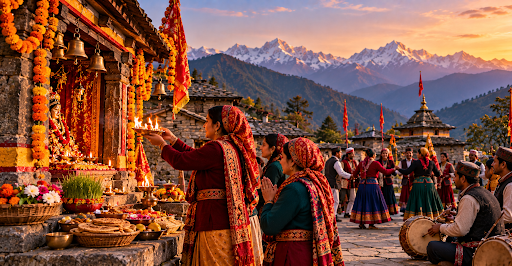
Navratri Begins with Ghatasthapana and Daily Puja
ike elsewhere in India, Shardiya Navratri begins with Ghatasthapana, followed by daily worship of the different forms of Goddess Durga. In many homes, devotees light a diya, establish a kalash and maintain a small prayer space throughout the nine days.
Fasting is also common. Families may avoid grains, certain spices and non-vegetarian food during the festival, while eating vrat-friendly preparations such as fruits, potatoes, kuttu and singhara-based dishes. The specific fasting rules depend on family traditions.
But in the mountains, worship is not restricted to homes. Local temples become important gathering points, particularly those dedicated to Devi and other regional deities.
Nanda Devi Holds a Special Place in Pahadi Culture
To understand Navratri celebrations in Uttarakhand, it is important to understand the cultural importance of Goddess Nanda Devi.
Nanda Devi is deeply revered across Kumaon and Garhwal. The Kumaon division's official website notes that Nanda Devi is worshipped in numerous places across the region, while the Nanda Devi fairs are held in places including Almora, Nainital, Bageshwar, Bhowali and villages in the Johar region.
The connection goes beyond temple worship. Nanda is traditionally associated with the mountains and is regarded as a family deity in parts of Uttarakhand. This is why Nanda Devi festivals in Uttarakhand often carry a strong sense of community and belonging.
Temples Become the Heart of the Celebration
During the festive period, people visit their local temples to offer prayers, flowers, diyas and other offerings. In villages, these gatherings can become social occasions as well, bringing families and neighbours together.
The Nanda Devi celebrations are particularly known for their dola or palanquin processions. At major celebrations in Kumaon, idols or representations of Nanda and Sunanda are carried through the streets accompanied by devotional singing and local performances.
This combination of worship, music, procession and community participation gives Pahadi festivals their distinctive character.
Folk Songs and Dance Add to the Festivities
One of the most beautiful aspects of Uttarakhand festival traditions is how closely religion and folk culture are connected.
Festivals such as the Nanda Devi Mela feature local songs, dances and performances alongside religious rituals. Government tourism sources describe these celebrations as occasions where local artists perform and village artisans display handmade products.
In smaller mountain communities, these traditions can feel much more intimate. Instead of large-scale commercial celebrations, the focus may remain on temple visits, family gatherings, devotional music and community participation.
Navratri Food in the Hills
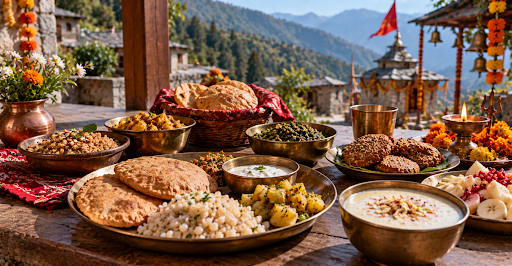
Food during Navratri is simple and largely guided by fasting traditions. Fruits, milk, curd, potatoes, arbi, kuttu and singhara flour can feature in vrat meals.
What makes the experience interesting for travellers is the way these familiar fasting ingredients meet traditional Pahadi cooking practices. Depending on the household and locality, you may find simple homemade preparations rather than elaborate festive menus.
If you are staying in a village homestay during Navratri, this can also be a lovely opportunity to experience how local families adapt everyday mountain food for the festival.
More Than Nine Days of Worship
Uttarakhand's Devi traditions extend beyond the nine days of Navratri. The region has several local fairs, jatras and pilgrimage traditions associated with Goddess Nanda.
The Nanda Devi Raj Jat Yatra, for example, is a major pilgrimage in Chamoli held once every 12 years. The Garhwal Mandal website describes it as a three-week-long journey in which devotees from Garhwal, Kumaon and beyond participate.
This wider tradition helps explain why Devi worship in the hills is not simply about a festival. It is connected to local history, geography, family traditions and the identity of mountain communities.
Experience Navratri in Uttarakhand
If you are travelling to Uttarakhand during Navratri, consider visiting a local temple or village rather than limiting your experience to tourist attractions. Dress respectfully, ask before photographing rituals and remember that some ceremonies are deeply personal to the community.
From the ringing of temple bells to evening diyas, devotional songs and processions carrying the local deity, Navratri in Uttarakhand offers a quieter and deeply rooted experience of the festival.
And perhaps that is what makes Pahadi celebrations special: the festival does not feel separate from mountain life. Faith, family, folklore and community come together naturally, creating a celebration that belongs to the hills.