
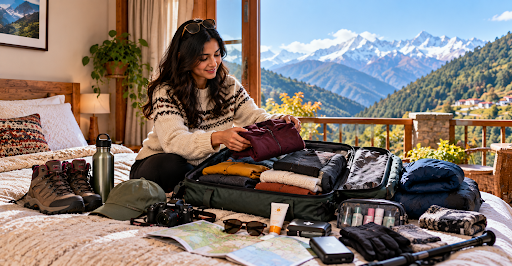
1. Pack Layers, Not One Bulky Jacket
Don't pack only heavy winter clothes. You'll likely experience warm afternoons and chilly mornings or evenings, particularly in mid-altitude destinations.
Carry:
- 3–4 quick-dry T-shirts or full-sleeve tops
- 1–2 fleece or warm sweatshirts
- 1 insulated jacket
- 1 lightweight windproof or waterproof outer layer
- Comfortable trousers
- One thermal set if you're travelling above 2,500–3,000 metres
- 3–4 pairs of warm socks
Practical tip: A three-layer system works better than one extremely thick jacket. You can remove a layer while travelling during the day and add it back after sunset.
For places such as Auli, Chopta, Kedarnath and Badrinath, add thermals, gloves and a warmer jacket. Temperatures at higher elevations can approach freezing at night.
2. Don't Compromise on Footwear
This is one item where saving space can backfire. For a regular hill holiday, carry one pair of comfortable, closed walking shoes with good grip. If trekking is part of your itinerary, take proper trekking shoes rather than ordinary sneakers.
Avoid completely new shoes on the trip. Mountain walks can involve uneven, loose or slippery sections, particularly after the monsoon.
If you're doing a longer trek, also pack:
- 2 pairs of trekking socks
- Lightweight sandals or slippers for your stay
- Blister patches
3. Your Rain Gear Still Matters
October is considerably drier than the monsoon season, but that doesn't mean rain is impossible. Early October can still see occasional showers, and mountain weather can change quickly.
Instead of carrying a large umbrella, a compact rain jacket or poncho is more useful, especially if you're trekking.
Also put electronics, documents and spare clothes inside zip-lock or waterproof pouches. One unexpected shower can turn an organised backpack into a wet mess.
4. Sun Protection Is a Mountain Essential
Cool weather can make you forget about the sun. Don't.
At higher altitudes, UV exposure can be stronger, and you can spend hours outdoors without realising how much sun you're getting.
Pack:
- SPF 30–50 sunscreen
- UV-protection sunglasses
- Cap or hat
- Lip balm with SPF
- Moisturiser
Reapply sunscreen if you're spending most of the day outdoors.
5. Carry a Small Daypack
Don't take your main suitcase everywhere.
A 15–25 litre daypack is enough for day trips and short hikes. Keep your essentials inside:
- Water bottle
- Light jacket
- Rain layer
- Sunscreen
- Snacks
- Power bank
- Medicines
- Sunglasses
- Tissues and wet wipes
This becomes particularly useful when your vehicle can't get close to viewpoints, temples or trekking routes.
6. Don't Forget Your Medicine Kit
Your personal medicines should always be packed in your hand luggage or daypack rather than buried inside your suitcase.
A basic travel kit can include:
- Prescription medicines
- Basic pain relief
- Bandages and antiseptic
- Motion-sickness medicine if you need it
- ORS
- Blister patches
- Any medication you normally rely on
If you're travelling to higher altitudes, don't self-medicate for altitude-related symptoms. If you feel significantly unwell, tell your travel companion or guide and seek medical assistance.
7. Electronics: Pack for Weak Charging Options
Mountain stays may not always have convenient charging access.
Carry:
- Power bank
- Charging cable
- Phone charger
- Spare memory card if you're carrying a camera
- Small torch or headlamp for trekking
A useful trick: Keep your power bank and phone protected from extreme cold. Batteries can lose charge faster in low temperatures
8. A Few Things People Forget
These take very little space but can make your trip considerably easier:
- Reusable water bottle
- Small snacks such as nuts or energy bars
- Hand sanitiser
- Tissues
- Sunglasses case
- ID and booking documents
- Some cash in smaller denominations
- Offline maps
- A couple of garbage bags for wet clothes or waste
Don't rely entirely on mobile connectivity in remote mountain areas. Download important maps, hotel details and tickets before leaving for areas with patchy network coverage.
Your Uttarakhand October Packing Checklist
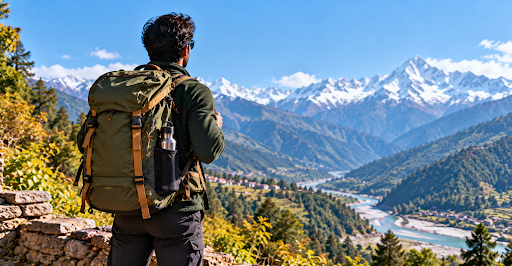
Clothes: T-shirts, full sleeves, fleece, insulated jacket, trousers, thermals, warm socks
Footwear: Grippy walking shoes/trekking shoes, slippers
Weather: Rain jacket/poncho, waterproof pouches
Health: Personal medicines, ORS, first-aid basics, blister patches
Sun protection: SPF 30–50 sunscreen, sunglasses, cap, SPF lip balm
Tech: Phone, charger, power bank, torch/headlamp
Travel essentials: ID, bookings, cash, water bottle, snacks, daypack
One last packing rule
Pack according to your highest destination, not your starting point.
If you're travelling from Delhi to Rishikesh, then Mussoorie, you won't need the same layers as someone continuing towards Chopta or Badrinath. Uttarakhand's altitude changes quickly, and so should your packing list.
That little bit of planning means less luggage, fewer uncomfortable surprises and more time enjoying the mountains.